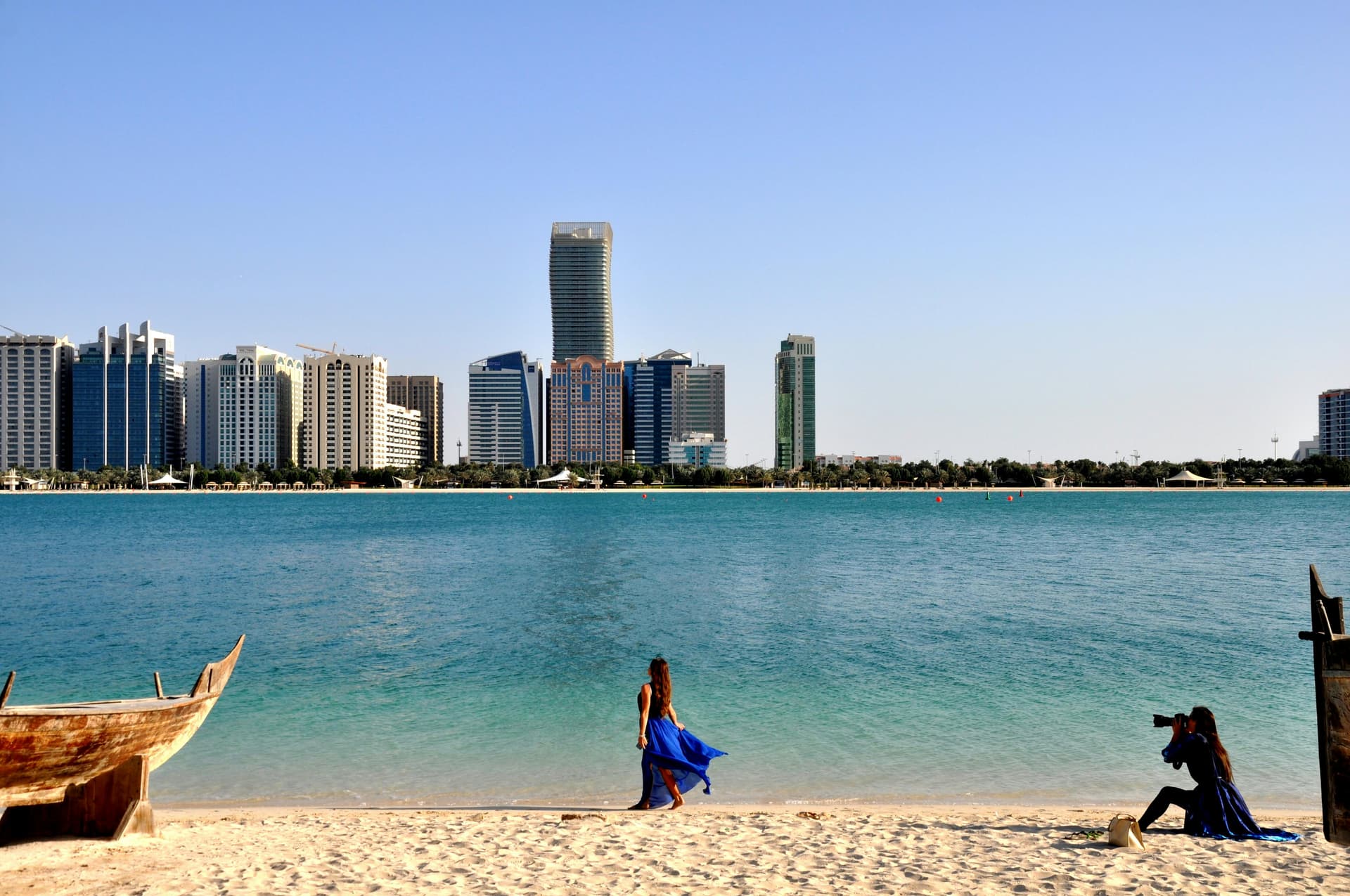
Confused about what to wear in Dubai? This honest 2026 dress code guide covers every situation, from beaches to mosques to desert safaris, so you pack right the first time.
Packing for Dubai produces more anxiety than it should.
People spend hours second-guessing every item of clothing before a UAE trip, convinced that one wrong outfit will land them in trouble. They arrive wearing more layers than the weather requires, pass dozens of tourists in perfectly normal summer clothes, and quietly wonder what all the worry was about.
Here is the honest version: Dubai's dress code is not complicated. It is contextual. The same country that has world-class beach resorts and rooftop pool bars also has some of the most architecturally magnificent mosques on earth, and the clothing that makes sense in one setting is simply not appropriate in the other. Once you understand the logic behind the contexts, the packing question answers itself.
This guide covers every situation you will encounter on a UAE trip in 2026. Read it once, pack accordingly, and spend the rest of your planning energy on the experiences themselves. Speaking of which, Aureum Tours offers culturally informed guided experiences across Dubai and the UAE, with guides who brief you on every dress and behaviour consideration before each stop. Browse the full tour collection or contact the team to start planning.
Dubai's dress code depends entirely on where you are. At beaches, pools, and resort areas, normal swimwear and casual clothing apply. In malls, tourist districts, and restaurants, standard international dress is fine. In mosques and traditional market areas, full-length clothing covering arms and legs is required, and women must cover their hair at religious sites. The rule that covers almost every situation: shoulders and knees covered in any public space outside a beach or pool area.
Why the Dress Code Exists and Why It Is Worth Respecting
The UAE is a Muslim-majority country where Islamic values shape public life in visible and specific ways. Modesty in dress is not a bureaucratic regulation imposed on visitors. It is a cultural expression of values that the Emirati community holds genuinely and deeply.
Most tourists who understand this find the dress code easy to follow. It stops feeling like a restriction and starts feeling like the baseline courtesy you would extend to any community you are visiting as a guest. That shift in perspective changes the whole experience.
The UAE also does not expect international visitors to dress like locals. Nobody is going to stop you for wearing a sundress in Downtown Dubai. The line is not about cultural performance. It is about awareness, and specifically about not wearing things in contexts where they signal a complete absence of it.
The Four Contexts and What Each One Requires
Everything becomes easier once you think in contexts rather than trying to memorise a rule for every individual location.
Context 1: Beaches and Pools
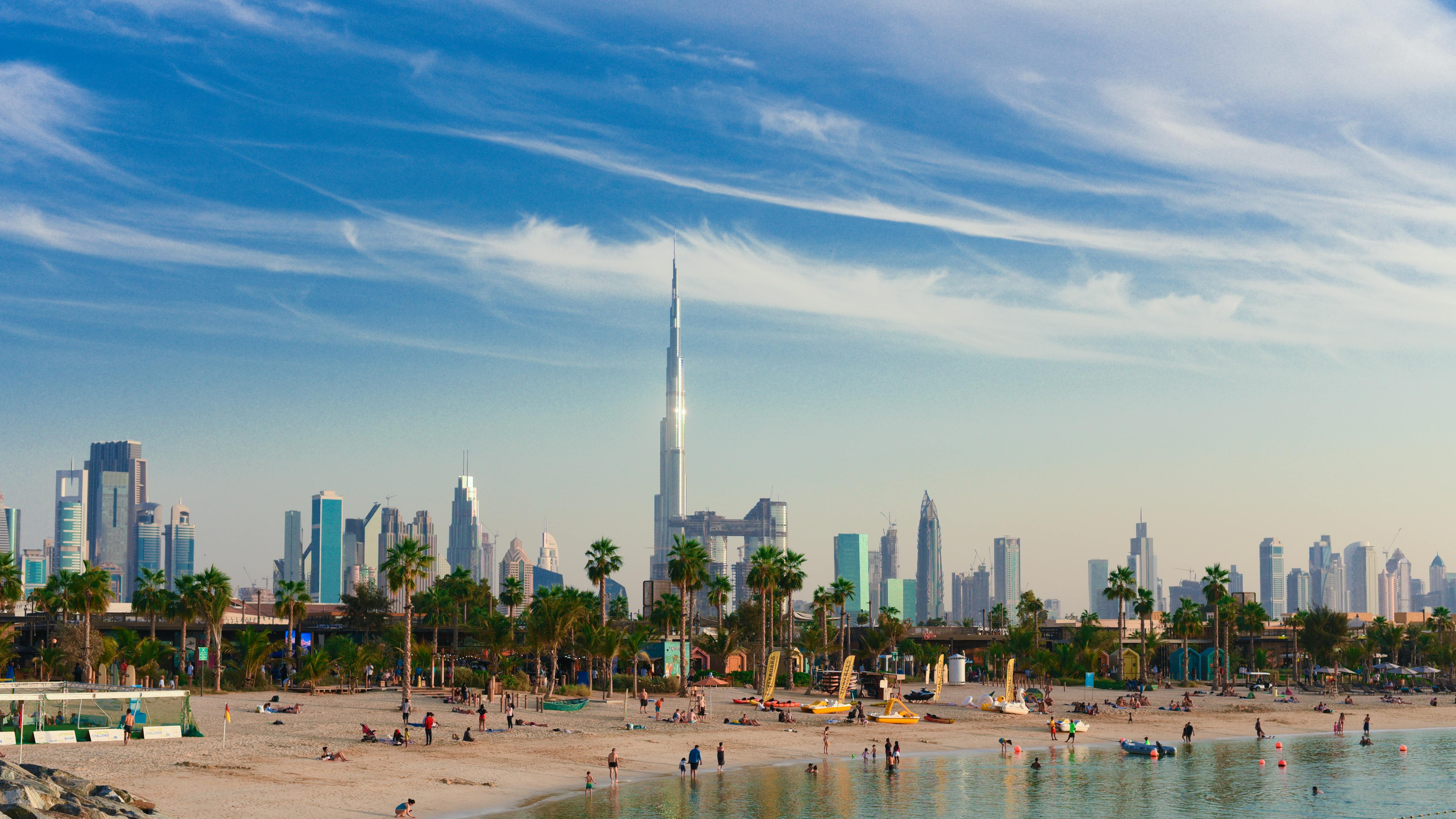
Swimwear is appropriate at designated beach areas and hotel pools. This is unambiguous and applies to both men and women. Bikinis, trunks, one-pieces, all standard beach and pool attire is perfectly acceptable in these settings.
The line is drawn when you leave the beach or pool area. Wearing swimwear or beach cover-ups through a mall, along a public street, or into a restaurant that is not immediately adjacent to the pool is not appropriate and will draw attention that ranges from uncomfortable stares to politely firm requests to cover up.
The practical habit: pack a sarong or a light cover-up and put it on the moment you step off the sand or away from the pool. Takes three seconds and removes any ambiguity entirely.
Men: Board shorts and no shirt are fine at the beach and pool. A t-shirt is appropriate the moment you are walking through any public area.
Women: Standard swimwear at designated beach and pool areas. Cover-up required when moving through public spaces.
Context 2: Malls, Tourist Areas, Restaurants and Hotels

This is the context where most tourists worry unnecessarily.
Standard international clothing applies here. Jeans, t-shirts, casual dresses, shorts that reach the mid-thigh, short sleeves, all of these are completely fine in Dubai's shopping malls, tourist districts, hotel lobbies, and most restaurants. Dubai Mall, the Marina, Downtown, Jumeirah Beach Road, the Gold Souk entrance corridor, these are all environments where you will see tourists dressed in entirely unremarkable Western clothing and nobody giving it a second thought.
The soft guideline that helps in ambiguous situations: shoulders and knees covered in shared public spaces. This covers the vast majority of places you will visit on a standard Dubai itinerary and removes the need to make individual judgements about each location.
Very short skirts, shorts that are more underwear than outerwear, and tops that are sheer or extremely low-cut are the things that will occasionally prompt a quiet word in a mall or a traditional area. Not a fine, not an arrest, just a request to cover up. Avoiding them in public spaces entirely is easier than navigating that on the day.
Men: Shorts, t-shirts, and casual clothing are all fine. Vests and tank tops are better suited to the gym than a public shopping environment.
Women: Casual dresses, jeans, shorts to mid-thigh, short sleeves, all fine. Avoid very short hemlines and significant exposure in shopping and tourist areas.
Context 3: Mosques and Religious Sites
This is where the dress code is formal and consistently enforced.
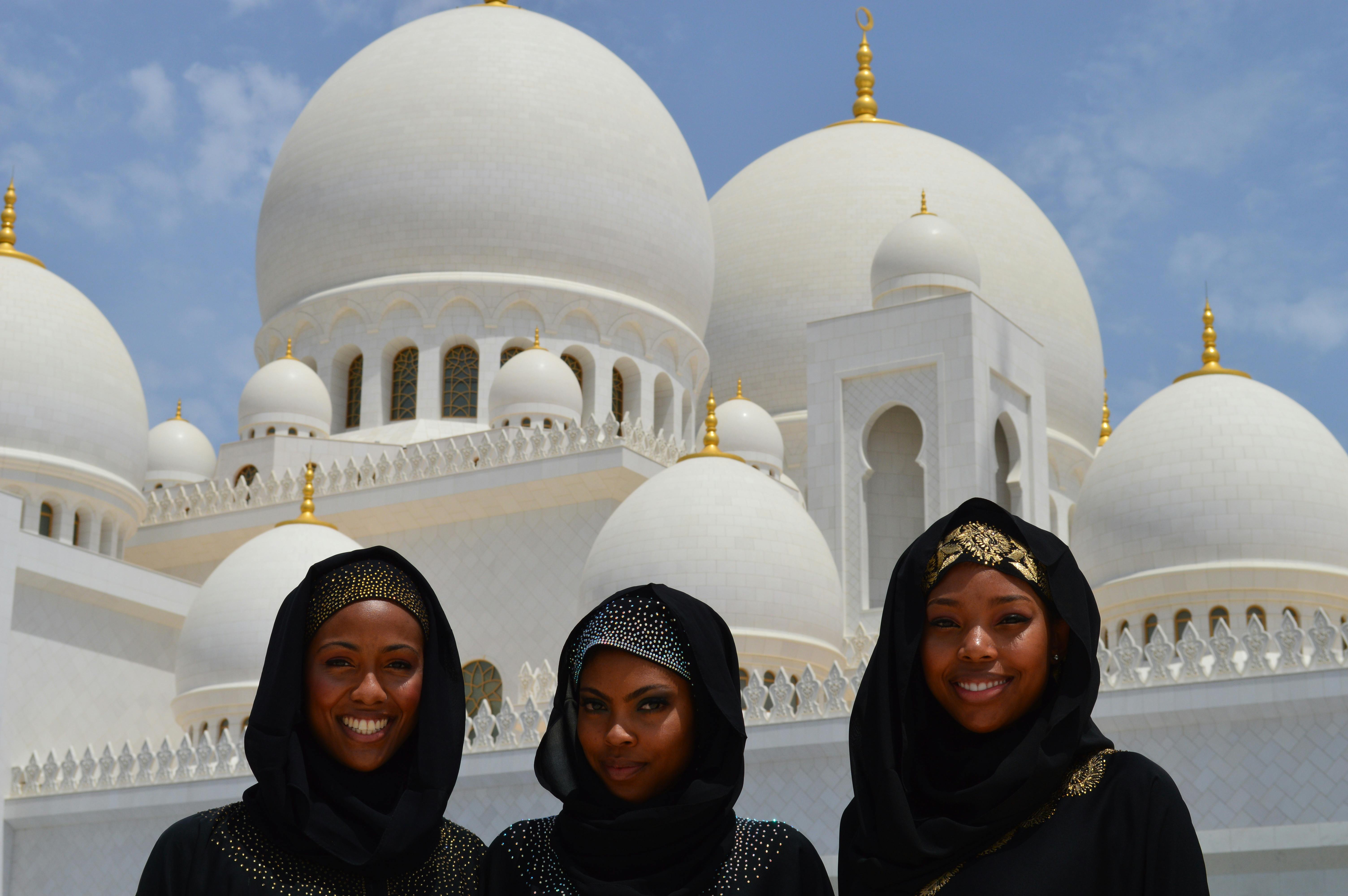
Both the Sheikh Zayed Grand Mosque in Abu Dhabi and the Jumeirah Mosque in Dubai require full-length clothing covering arms and legs for all visitors. Women must also cover their hair with a scarf or hijab.
The good news is that neither mosque sends you away if your clothing does not meet the requirement. Both have free abaya and scarf lending at the entrance, so you can arrive in your normal tourist clothing and borrow appropriate attire before entering. This is commonly done and there is no embarrassment attached to it.
What is less forgivable is turning up to these sites in clothing so far from the requirement that the lent abaya cannot compensate for it. Very short shorts under a floor-length abaya create a visual that is both awkward and slightly disrespectful. Arriving in clothing that at least partially meets the requirement, and supplementing with what is lent at the entrance, is the more considered approach.
Men: Long trousers and a shirt covering the shoulders are required. Shorts are not appropriate at mosque entrances regardless of length.
Women: Full-length clothing covering arms and legs. Hair must be covered. A long dress or loose trousers with a long-sleeved top is the easiest baseline outfit. Bring your own scarf if you prefer not to use the lent ones.
The Sheikh Zayed Mosque Morning Tour Private with Aureum includes a full pre-visit briefing on exactly what to wear and bring, so nothing is left to chance on the day.
Context 4: The Desert and Outdoor Activities
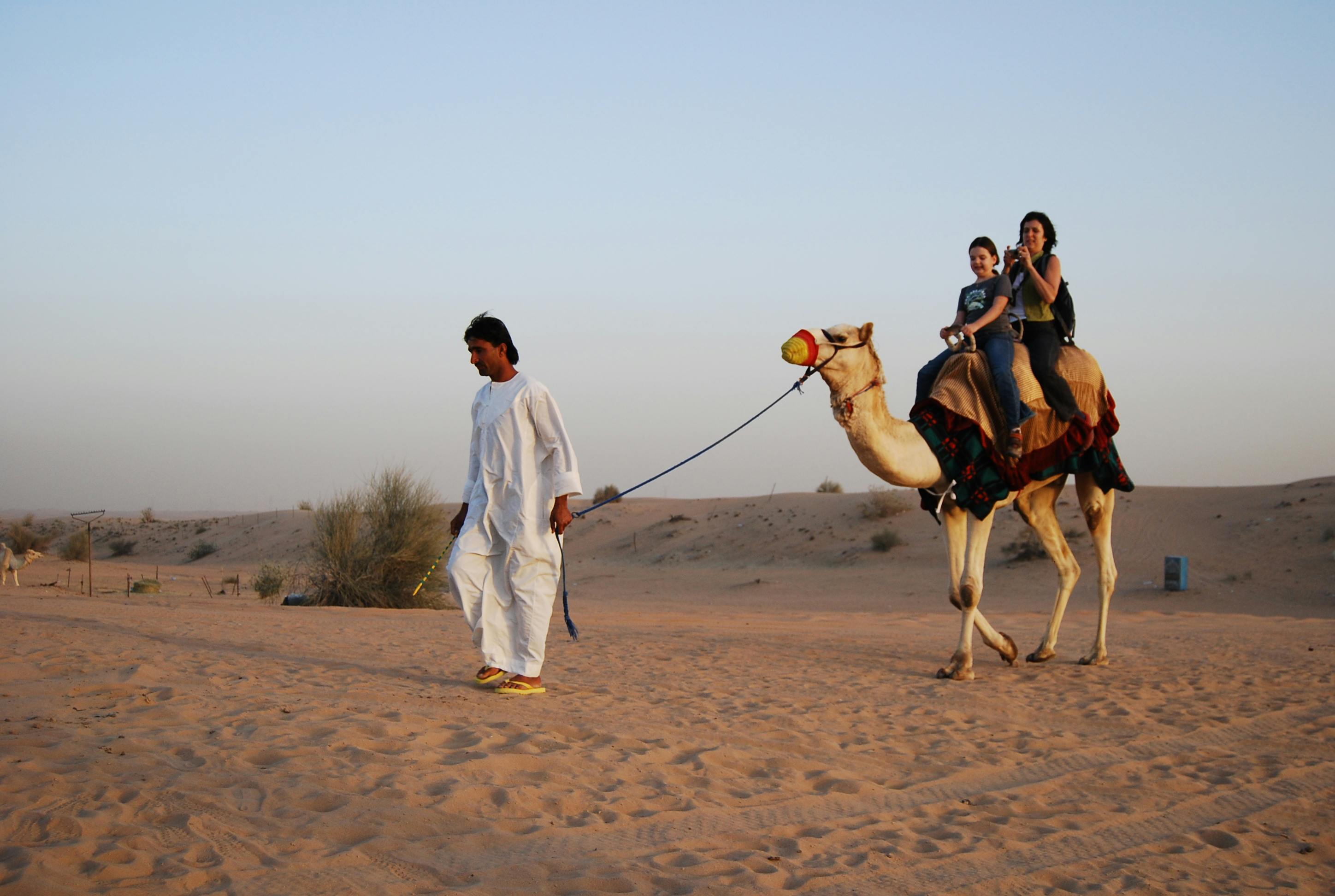
The desert is a different kind of dress consideration, less about cultural rules and more about practical comfort and safety.
For a desert safari, whether the evening tour with BBQ dinner or the morning adventure, the priority is comfort in shifting temperatures and protection from the sun and sand.
Light, breathable trousers or leggings are better than shorts for dune bashing because the sand is abrasive and getting into everything is part of the experience. A light long-sleeved layer is useful for the evening desert when temperatures drop after sunset. Closed shoes or trainers are significantly better than sandals or flip-flops for any physical activity in the dunes.
For the Hatta Full Day Private Tour, where the day involves walking through a heritage village and potentially hiking on mountain trails, comfortable closed-toe shoes and light but full-coverage clothing make a meaningful practical difference to how enjoyable the day is.
Men and women: Light trousers or leggings, breathable top, closed shoes, light jacket for evening desert, hat and sunscreen regardless of time of year.
What to Actually Pack: A Practical Checklist
Based on everything above, here is a packing list that covers a standard five-to-seven day UAE trip without overpacking.
For women: Two or three lightweight maxi dresses or loose trousers with long-sleeved tops serve as the all-purpose outfit that works from the souk to a mosque visit with no changes needed. Pair with a light cardigan for indoor air-conditioning, which in Dubai is aggressive. One swimsuit for beach and pool days. A pashmina or long scarf that doubles as a beach cover-up and a mosque hair cover. One smart evening outfit for a nicer dinner. Comfortable walking shoes and sandals.
For men: Lightweight chinos or trousers for day use in tourist areas and any cultural sites. Shorts are fine for beach days and casual outdoor time. A couple of collared shirts for nicer restaurants and cultural sites. One smart layer for evenings. Comfortable walking shoes, ideally closed-toe for any outdoor activity days.
For everyone: The single most useful item in your Dubai suitcase is a lightweight layer you can add or remove as the context shifts. The temperature difference between the outdoor heat and the indoor air-conditioning in Dubai's malls and restaurants can be dramatic. A light linen shirt or a thin cardigan is the most practical item you can pack.
Things You Can Leave Behind
A few items that generate pre-trip packing anxiety but genuinely do not need to travel to Dubai with you.
Heavy modest clothing designed for cold weather. The coverage required by the dress code does not require weight. Light, breathable fabrics in full-length cuts are far more comfortable and equally appropriate.
A separate "mosque outfit" packed specifically for religious sites. You do not need a dedicated outfit. A maxi dress or loose trousers and a long-sleeved top work for mosques, souks, traditional areas, and general tourist use. One versatile outfit covers all of it.
Paranoia about Western clothing generally. Dubai is an international city that receives millions of tourists annually. You are not going to cause a diplomatic incident wearing a sundress in a mall. The rules are specific and they apply in specific contexts. Outside those contexts, dress normally.
The Dress Code During Ramadan
If your visit falls during Ramadan, one adjustment is worth making beyond the standard dress considerations.
The cultural expectation during Ramadan is slightly more conservative clothing across all public settings, not just religious sites. This does not require a wardrobe change if you are already following the shoulder-and-knee guideline for public spaces. It simply means being a bit more attentive to that baseline across more of your day.
Beach and pool dress codes do not change during Ramadan. Hotel restaurants and private spaces are unaffected. The adjustment is in public-facing settings, streets, markets, and open tourist areas, during daylight hours specifically.
What Happens If You Get It Wrong
Worth saying plainly because the anxiety around this is disproportionate to the reality.
If you enter a mall or public area in clothing that is considered inappropriate, the most likely outcome is nothing at all. In some traditional or religious spaces, a security guard or staff member may politely ask you to cover up. In the very few cases where clothing is genuinely and obviously extreme in a public space, a more formal request is possible.
Criminal consequences for tourist dress are rare, genuinely rare, and almost always involve something significantly beyond the normal questions of whether shorts are acceptable. The tourists who experience serious problems related to dress are almost invariably doing something else alongside the clothing issue.
Following the context-based approach in this guide makes the entire question largely irrelevant. Appropriate clothing for each setting is not a burden. It takes ten seconds of thought before leaving each venue.
How Guided Tours Remove the Dress Code Guesswork
One of the practical advantages of booking a guided tour rather than navigating the day independently is that the dress preparation happens before you leave the hotel.
On any Aureum Tours experience that involves a mosque visit, a heritage site, or any cultural stop, your guide will brief you on exactly what to wear and what to bring before the day begins. No surprises at the entrance. No awkward moments at a borrowed abaya counter. No photographs ruined because someone in the group had to borrow a bright orange lent robe that was the only size available.
That kind of operational awareness is part of what separates a guided tour from a self-directed day, and it extends to every detail of the experience, not just clothing.
Browse the full collection of UAE tours and experiences. For a guided introduction to Abu Dhabi's cultural sites with all dress and protocol details handled, the Sheikh Zayed Mosque Morning Tour is the natural starting point. For the complete Abu Dhabi day, the Full Day Abu Dhabi Tour covers every major cultural site in a single guided experience.
For questions about what to expect on any specific tour, get in touch with the team before you book. That conversation takes five minutes and removes every remaining uncertainty.
Also worth reading from the Aureum blog before your trip: the complete UAE culture guide for tourists covers the broader cultural context behind the dress code, and the overnight desert safari guide includes specific packing advice for that experience.
Dress Code at a Glance: 2026 Reference Table
Location | Men | Women | Notes |
Beach and pool | Swim shorts, no shirt fine | Swimwear acceptable | Cover up immediately when leaving the area |
Malls and tourist areas | Shorts, t-shirt fine | Casual dress, shorts to mid-thigh | Avoid very short hemlines and sheer tops |
Restaurants and hotels | Smart casual | Smart casual | No swimwear or beach attire |
Souks and traditional markets | Trousers, covered shoulders preferred | Trousers or long skirt, covered shoulders | More conservative than mall standards |
Mosques | Long trousers, shirt covering shoulders | Full-length, arms covered, hair covered | Abayas lent at entrance if needed |
Desert safari | Light trousers, breathable top | Light trousers or leggings, breathable top | Closed shoes for dune activities |
Hatta and outdoor sites | Comfortable trousers, closed shoes | Same; light long-sleeved layer useful | Sun protection essential year-round |
Ramadan public spaces | As above, slightly more conservative | As above, slightly more conservative | Daytime only; beach and hotel standards unchanged |
Frequently Asked Questions
Can you wear shorts in Dubai as a tourist?
Yes. Shorts are acceptable in malls, tourist areas, restaurants, and general public spaces as long as they reach approximately mid-thigh. Very short shorts are better suited to beach and pool settings. At mosques and formal cultural sites, long trousers are required for both men and women.
Do women have to cover their hair in Dubai?
Only at mosques and formal religious sites. Hair covering is not required in hotels, malls, restaurants, tourist areas, or public streets. At the Sheikh Zayed Grand Mosque and the Jumeirah Mosque, hair covering is required and scarves are available to borrow at the entrance.
What should I wear for a desert safari in Dubai?
Light, breathable trousers or leggings rather than shorts, a breathable top, closed shoes for dune activities, and a light jacket or layer for the evening when temperatures drop after sunset. Sandals and flip-flops are less practical for any physical activity in the dunes.
Is there a dress code in Dubai Mall?
There is no strictly enforced formal dress code at Dubai Mall beyond the general public standards. Very short shorts, swimwear worn as regular clothing, and extremely revealing tops may prompt a request to cover up. Standard tourist clothing including shorts, t-shirts, and casual dresses is completely fine.
What happens if I wear the wrong thing at a mosque?
You will not be turned away. Both the Sheikh Zayed Grand Mosque in Abu Dhabi and the Jumeirah Mosque in Dubai provide free abayas, scarves, and appropriate clothing at the entrance for visitors whose outfit does not meet the requirement. Arriving in clothing that at least partially complies makes the process smoother.
Can I wear a bikini on Dubai beaches?
Yes. Swimwear including bikinis is appropriate at designated public beaches and hotel pool areas. The expectation is that a cover-up is worn when moving through any public area beyond the immediate beach or pool zone.
Is the dress code different during Ramadan?
Slightly more conservative standards apply in public-facing spaces during Ramadan daytime hours. Beach and pool settings are unaffected. The shoulder-and-knee baseline that applies in public spaces generally becomes slightly more important to observe consistently during the Ramadan period.
Pack light, pack smart, and pack with context. The UAE dress code takes thirty seconds to understand once someone explains it properly.Plan your trip with Aureum Tours,explore every Dubai and UAE experience, orreach out to the team with any question before you arrive.