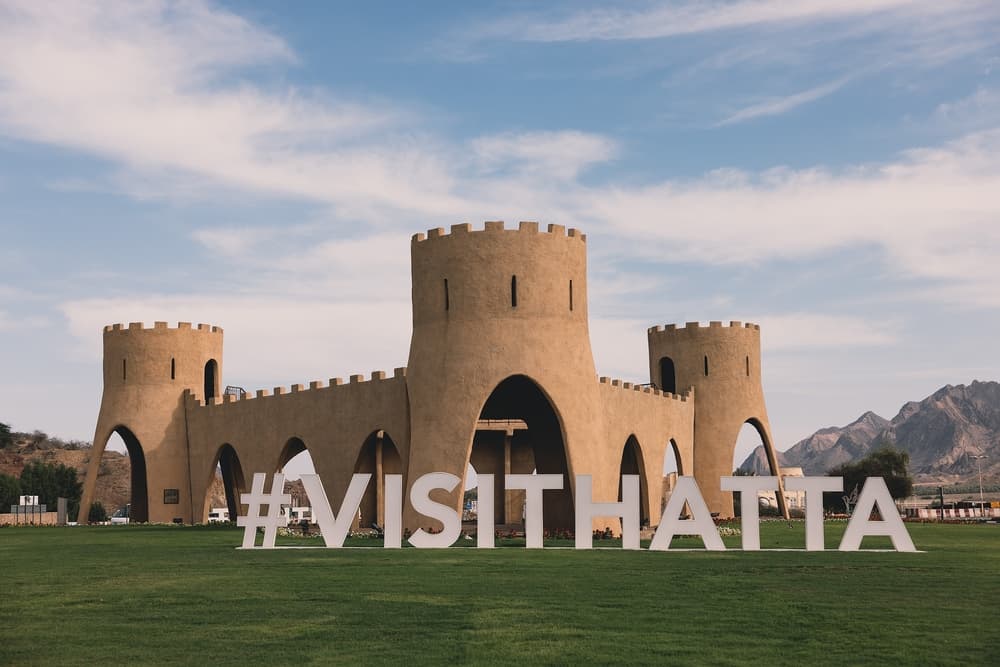
Hatta is Dubai's best-kept secret. This complete 2026 travel guide covers the dam, heritage village, museum, desert safari, and everything you need to plan the perfect Hatta day trip.
There is a version of Dubai that nobody photographs for Instagram. No skyscrapers. No golden fountains. No perfectly lit marble lobbies. Just rust-red mountain ridges, a turquoise reservoir sitting quietly between rock faces, and a village that has been in the same valley for centuries, long before the emirate existed and long before anyone thought to call this corner of Arabia a tourist destination.
That place is Hatta. And almost nobody goes there.
Which is exactly why you should.
If you are already in Dubai and spending more than three days in the country, Hatta is the day trip that most travelers skip and most guides underwrite. It sits about 90 minutes east of Downtown Dubai in the Hajar Mountains, technically within the emirate of Dubai but feeling nothing like it. The landscape shifts somewhere around the halfway point of the drive. The flatness of the desert gives way to something more dramatic. Roads start bending. Rock formations appear. The temperature drops a few degrees. By the time you arrive, you are somewhere else entirely.
This is the complete Hatta travel guide for 2026. Everything you need to plan the day, sequence the experiences, and understand what makes this place so different from everything else the UAE offers. And at the end, how Aureum Tours makes the whole day effortless, from hotel pickup in Dubai to drop-off at the end of it.
What Hatta Actually Is (And Why Most Tourists Miss It)
Hatta is a mountain enclave of Dubai located approximately 130 kilometres east of Downtown, roughly a 90-minute drive. Meaning it is part of the emirate but geographically separated from it by territory belonging to Oman and other emirates. The drive from Dubai passes through Omani land twice, though you do not need a visa for the transit, just a valid passport and travel insurance that covers Oman.

The town itself is small. There is no mall, no infinity pool, no nightlife. What there is instead is a landscape of genuine drama, a heritage village that was inhabited for centuries before the modern UAE existed, a dam that creates one of the most visually striking scenes in the entire country, and a quietness that is increasingly rare in this part of the world.
Most tourists miss Hatta for the same reason they miss most things worth seeing: it requires a bit more effort than pointing a taxi at the Burj Khalifa. The drive is longer. The experience does not announce itself. You have to want to go there.
The tourists who make the effort almost always name it as the best day of their UAE trip. That is not a coincidence.
The main experiences are the Hatta Dam kayaking, the Hatta Heritage Village, the Hatta Museum, and the surrounding Wadi Hatta landscape. Most visitors do it as a full-day trip from Dubai. It is the most underrated day trip in the UAE and one of the most memorable experiences the country offers
Getting to Hatta from Dubai
The drive from Dubai takes approximately 90 minutes in normal traffic conditions, covering around 130 kilometres via the E44 highway toward the Hatta border area. The road is well maintained and clearly signposted for most of the route.
A few practical notes for the drive:
The E44 passes through an Omani transit zone. You do not stop or go through immigration, but you must have your passport and valid travel insurance that covers Oman. Most comprehensive travel insurance policies include this automatically, but worth confirming before you go.
Petrol stations are available along the E44 but become sparse as you get closer to Hatta. Fill up in Dubai before you leave.
Parking at the main Hatta attractions, particularly the dam and heritage village, is available and generally free, though it fills quickly on weekends and public holidays. If you are visiting on a Friday or Saturday, arrive at the dam before 9 AM.
The cleanest option, particularly for first-time visitors to Hatta, is a guided full-day tour with door-to-door transport. Aureum's Hatta Full Day Private Tour covers pickup from your Dubai hotel, all the major stops, an English-speaking guide throughout, and drop-off at the end of the day. Nothing to navigate, nothing to coordinate.
The Four Experiences That Make a Hatta Day
A well-planned Hatta day has four distinct chapters. Each one is different enough from the others that the day never feels repetitive, which is unusual for a single destination.
Experience 1: Hatta Dam Kayaking
This is the visual centrepiece of any Hatta visit and the experience most likely to stop you mid-paddle just to look around.

The Hatta Dam was constructed in 1990 to provide water storage for the surrounding area. What it created, incidentally, was one of the most striking bodies of water in the UAE: a wide turquoise reservoir sitting in a natural bowl formed by the Hajar Mountains, the rock faces rising sharply on all sides, the water so still in the early morning that the ridgeline reflects perfectly on the surface.
Kayaking is the primary activity here. Single and double kayaks are available for hire from the Hatta Dam Recreation Area, and the paddling itself is easy enough for complete beginners. The reward is not the exercise. It is the perspective: the mountains from water level, the sound of nothing except your paddle and occasionally a bird, the quality of light at this altitude in the early morning.
Go early. Before 10 AM if possible. The light is best then, the heat is manageable, and the surface of the water is at its calmest. By midday, the recreational area fills considerably, and the experience becomes more about navigation than atmosphere.
Other water activities at the dam include pedal boats, aqua bikes, and paddleboarding. All are available for hire on-site.
Best time: 8:00 to 10:30 AM
Duration at the dam: 1.5 to 2 hours
Cost: Kayak hire from approximately AED 60 to AED 90 per hour, depending on kayak type
Experience 2: Hatta Heritage Village
A short drive from the dam, the Hatta Heritage Village is one of the best-preserved examples of a traditional mountain settlement in the UAE. The village dates back over 3,000 years in various forms, though the structures you see today are largely reconstructions of the settlement that existed here through the 19th and early 20th centuries, before the population gradually moved to the modern town.

The village is built from mud, stone, and palm fronds, the three materials available in the mountain environment before anything had to be imported. Walking through it gives you a physical sense of how compact and functional traditional life was here: small sleeping rooms, communal cooking areas, a fort with watchtowers that could see across the entire valley, and falaj water channels that carried irrigation from the mountains down through the settlement.
Two watchtowers are still standing and climbable, giving views across Hatta that situate the old village within the modern town in a way that the ground-level walk alone does not.
The heritage village is free to enter and takes approximately one hour to walk through at a comfortable pace. Allow a bit more if you want to read the interpretive panels, which are genuinely informative and written in English as well as Arabic.
Duration: 1 to 1.5 hours
Entry: Free
Best combined with: The Hatta Museum, a ten-minute walk from the village entrance
Experience 3: Hatta Museum
The Hatta Museum is small. Do not let that put you off.
Located in what was originally the Sheikh's residence in Hatta, the museum covers the history of the area from its earliest settlement through to the formation of the UAE. The collection focuses on traditional tools, weapons, textiles, and objects of daily life specific to the Hatta mountain community, which developed differently from the coastal and desert communities more commonly represented in UAE heritage exhibitions.
There are sections on the falconry tradition, the water management systems that made settlement possible at this altitude, and the relationship between Hatta and the broader political history of the Trucial States.
For anyone with an interest in understanding where the UAE actually came from, this is one of the most honest and specific cultural experiences available in the country. Most heritage museums in the UAE deal in broad strokes. The Hatta Museum deals in the particular.
Duration: 45 minutes to 1 hour
Entry: Approximately AED 3
Experience 4: Wadi Hatta and the Mountain Landscape
Hatta is not just its organised attractions. The surrounding landscape is itself the experience, and spending time in it without a specific agenda is part of what makes the day feel complete.
Wadi Hatta is the valley system that runs through and around the town. Several marked hiking trails have been developed in recent years as part of Dubai's broader effort to position Hatta as an adventure tourism destination. The trails range from easy 2-kilometre loops suitable for casual walkers to more demanding routes that climb into the higher ridges.

Even without hiking, the drive through the mountain roads around Hatta is worth doing for the landscape alone. Pull over at the scenic viewpoints. The Hajar Mountains have a different quality of silence from the desert, denser somehow, and the light on the rock faces in the late afternoon turns them a shade of amber that does not photograph as well as it looks in person.
For visitors interested in a more structured adventure, Hatta also offers mountain biking trails managed by the Hatta Bike Park, which has become one of the most serious mountain biking destinations in the region, with trails graded for all ability levels.
The Ideal Hatta Day Trip Itinerary
This sequence is based on the guided tour format and optimised for light, temperature, and crowd management.
7:00 AM: Depart Dubai (hotel pickup with Aureum Tours)
9:00 AM: Arrive at Hatta Dam. Kayaking session before the crowds and the midday heat arrive. The light on the water at this hour is worth the early start on its own.
11:00 AM: Drive to Hatta Heritage Village. Walk the settlement, climb the watchtowers, read the landscape.
12:30 PM: Hatta Museum. Smaller and faster than the heritage village but contextually important.
1:30 PM: Lunch in Hatta town. The options are limited compared to Dubai but there are a handful of solid local restaurants in the town centre. Your guide will know which ones are worth it on the day.
2:30 PM: Wadi Hatta exploration or mountain drive. Depending on energy and interest, this is either a gentle hike on a marked trail, a drive through the scenic mountain roads, or time at the Hatta Bike Park if anyone in your group cycles.
4:00 PM: Final stop at a scenic viewpoint for the late afternoon light on the mountains.
5:00 PM: Depart for Dubai.
6:30 PM: Arrive back in Dubai.
What Hatta Feels Like Compared to the Rest of Dubai
This is worth saying directly because it shapes how you should think about the day.
Hatta does not feel like a theme park version of the outdoors. The landscape is not curated for tourists. The hiking trails are well-maintained but the terrain beyond them is genuinely rugged. The heritage village is a reconstruction but the location is authentic and the history is real. The dam kayaking is a leisure activity in a body of water that exists for functional reasons, not scenic ones, and it is more beautiful for that.
The day has a different emotional quality from a Dubai city tour or even a desert safari. It is quieter, slower, and less immediately spectacular. But it accumulates. By the time you are on the drive back, watching the mountains flatten out into the desert again, you understand something about the UAE that the city alone does not show you.
This is where the country came from. Before the oil, before the towers, before the airlines. People lived in these mountains, managed this water, built these stone rooms, and farmed this hard ground. The modern UAE is not separate from that history. It grew out of it.
That is the thing Hatta gives you that nowhere else in the country quite does.
Hatta in Different Seasons: When to Go
Hatta is a year-round destination but the experience changes significantly by season.

November through March is the best window. Daytime temperatures in Hatta sit between 15 and 25 degrees Celsius, which is ideal for kayaking, hiking, and walking the heritage village without discomfort. The mountain air is crisp in the mornings. The light is exceptional. This is peak season for good reason.
April and October are workable shoulder months. Temperatures are warmer but the mornings are still manageable if you follow an early departure schedule. Crowds are thinner than the peak months and the landscape retains most of its winter quality.
May through September is the difficult window. Hatta is cooler than Dubai by 5 to 8 degrees Celsius, which sounds significant until you realise that 40 degrees feels like 40 degrees regardless of the comparison. Outdoor activities like kayaking and hiking become genuinely uncomfortable by mid-morning. The heritage village and museum are fine as indoor-adjacent experiences, but a full Hatta day in July requires heat tolerance that most international visitors do not arrive with.
Hatta vs. the Desert Safari: Which Should You Choose?
This is a question worth answering because the two experiences are often presented as alternatives, particularly for visitors with limited time.
They are not really alternatives. They are different things.
A desert safari, whether the evening tour with BBQ dinner or the morning adventure, is about the sand desert specifically, the flat-to-rolling dune landscape southeast of Dubai. It is kinetic and social. Dune bashing, camel rides, camps, live entertainment. The energy is high.
Hatta is about the mountain desert. It is quieter, slower, and more contemplative. The activities are gentler. The cultural layer is deeper. The landscape is more varied.
If you have time for both, do both. They cover genuinely different ground, literally and experientially. If you have time for only one and you are traveling with children or first-time visitors who want a high-energy introduction to the UAE outdoors, the desert safari wins. If you are looking for something more immersive and less commonly done, Hatta wins.
Most visitors to Dubai who take the Hatta trip say they wish they had known about it earlier and planned the rest of their itinerary around it rather than fitting it in at the end.
Why a Guided Hatta Tour Changes the Day
The logistical case for a guided Hatta tour is straightforward: one vehicle from your Dubai hotel door to every stop and back, no navigation through unfamiliar mountain roads, no parking stress on a busy weekend, and no time lost figuring out where one experience ends and the next one begins.
The less obvious case is the one that matters more. Hatta without context is a pretty dam and some old buildings. Hatta with a guide who understands the falaj water system, the history of the watchtowers, the geology of the Hajar ridgeline, and the relationship between this mountain community and the coast 130 kilometres away is a genuinely educational and emotionally resonant experience.
Aureum's Hatta Full Day Private Tour is the most complete way to do the day. Hotel pickup from Dubai, a knowledgeable guide throughout, all the main stops covered in the right sequence, and a return by early evening.
Browse all Dubai and UAE experiences on aureumtours.ae or reach out to the team if you want to discuss combining Hatta with another day in your UAE itinerary.
Frequently Asked Questions
How far is Hatta from Dubai and how long does the drive take?
Hatta is approximately 130 kilometres from Downtown Dubai. The drive takes around 90 minutes in normal traffic via the E44 highway. Allow slightly more time on weekend mornings when traffic leaving Dubai is heavier. The road is well maintained and straightforward for most of the route.
Do I need a visa to drive to Hatta from Dubai?
No visa is required. The E44 route passes through an Omani transit zone but you do not stop or go through immigration. You do need a valid passport and travel insurance that covers Oman for the transit portion. Most comprehensive travel policies include this automatically.
What is there to do in Hatta besides the dam?
Hatta offers the Heritage Village, the Hatta Museum, Wadi Hatta hiking trails, the Hatta Bike Park mountain biking trails, scenic mountain drives, and a developing adventure tourism infrastructure that includes zip lines and obstacle courses at the Hatta Wadi Hub. A full day is easily filled without repeating any experience.
Is Hatta kayaking suitable for beginners?
Yes. The Hatta Dam reservoir is calm, flat water with no current. Single and double kayaks are stable and easy to manage with no prior kayaking experience. Life jackets are provided and compulsory. Children can participate with an adult in a double kayak.
What should I wear for a Hatta day trip?
Comfortable, breathable clothing suitable for walking and light activity. Closed-toe shoes are recommended for the heritage village and any hiking. Bring a hat and sunscreen regardless of season, a light jacket for early mornings between November and February, and a change of clothes if you plan to do any water activities.
How is Hatta different from a Dubai desert safari?
The desert safari experience takes place in the flat sand dune landscape southeast of Dubai and is generally high-energy: dune bashing, camelback rides, camps, and entertainment. Hatta is a mountain environment, quieter, more cultural, and more physically varied. The two experiences complement each other rather than overlap. If you have time for both, both are worth doing.
How do I book the Hatta Full Day Private Tour with Aureum?
Visit aureumtours.ae/tours/hatta-full-day-private-tour to book directly. Hotel pickup from Dubai is included. Alternatively, contact the Aureum team via WhatsApp to discuss a customised Hatta itinerary or to combine Hatta with other UAE experiences in your trip.
Hatta is 90 minutes from your hotel. Most people never go. The ones who do never stop talking about it. Book the Hatta Full Day Private Tour with Aureum and make it the day your UAE trip remembers most.